

Binary Search Tree (BST) qiymatlarni tartiblangan holatda saqlaydi:
- Chap qism daraxt (subtree) qiymatlari tugun (node) qiymatidan kichik bo'ladi.
- O'ng qism daraxt qiymatlari tugun qiymatidan katta bo'ladi.
Kitobga moslik (14 va 15-boblar)
Bu sahifa kitobdagi daraxtlarga oid ikki bobni birlashtiradi:
- binary daraxt tuzilishi va aylanib chiqishlar (traversal'lar)
- search-tree tartiblash qoidalari va lug'at (
dictionary) uslubidagi amallar
Asosiy g'oya: daraxt tuzilishi tartiblangan amallarni beradi, lekin bajarilish vaqti (runtime) sifati daraxt shakliga (muvozanatli yoki qiyshiq) bog'liq.
Nega BST foydali
BST qidirish va tartiblangan ma'lumotlar bilan ishlash amallarini bitta tuzilmada birlashtiradi:
- A'zolik (
membership) tekshiruvi (contains). - Tartiblangan aylanib chiqish (
inorder). - Daraxt shakli yordamida oraliq (range) bo'yicha mantiq.
Amallar
insert(key)
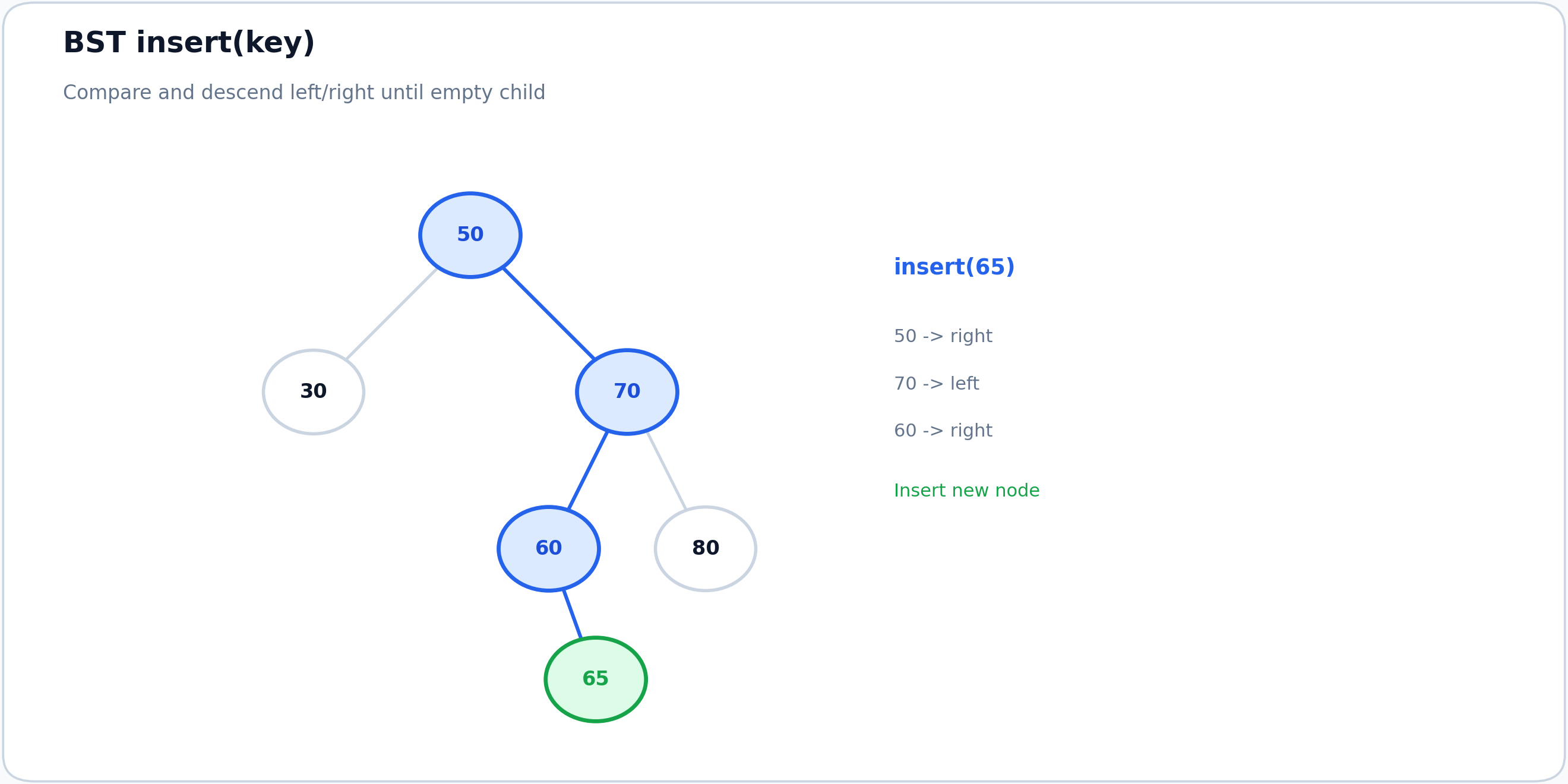
Ildizdan (root) boshlanadi. Kichikroq kalit (key) uchun chapga, kattaroq kalit uchun o'ngga harakatlanadi — to bo'sh bola tugun topilguncha.
def insert(self, key):
    self.root = self._insert(self.root, key)


def _insert(self, node, key):
    if node is None:
        return BSTNode(key)
    if key < node.key:
        node.left = self._insert(node.left, key)
    elif key > node.key:
        node.right = self._insert(node.right, key)
    return node
contains(key)
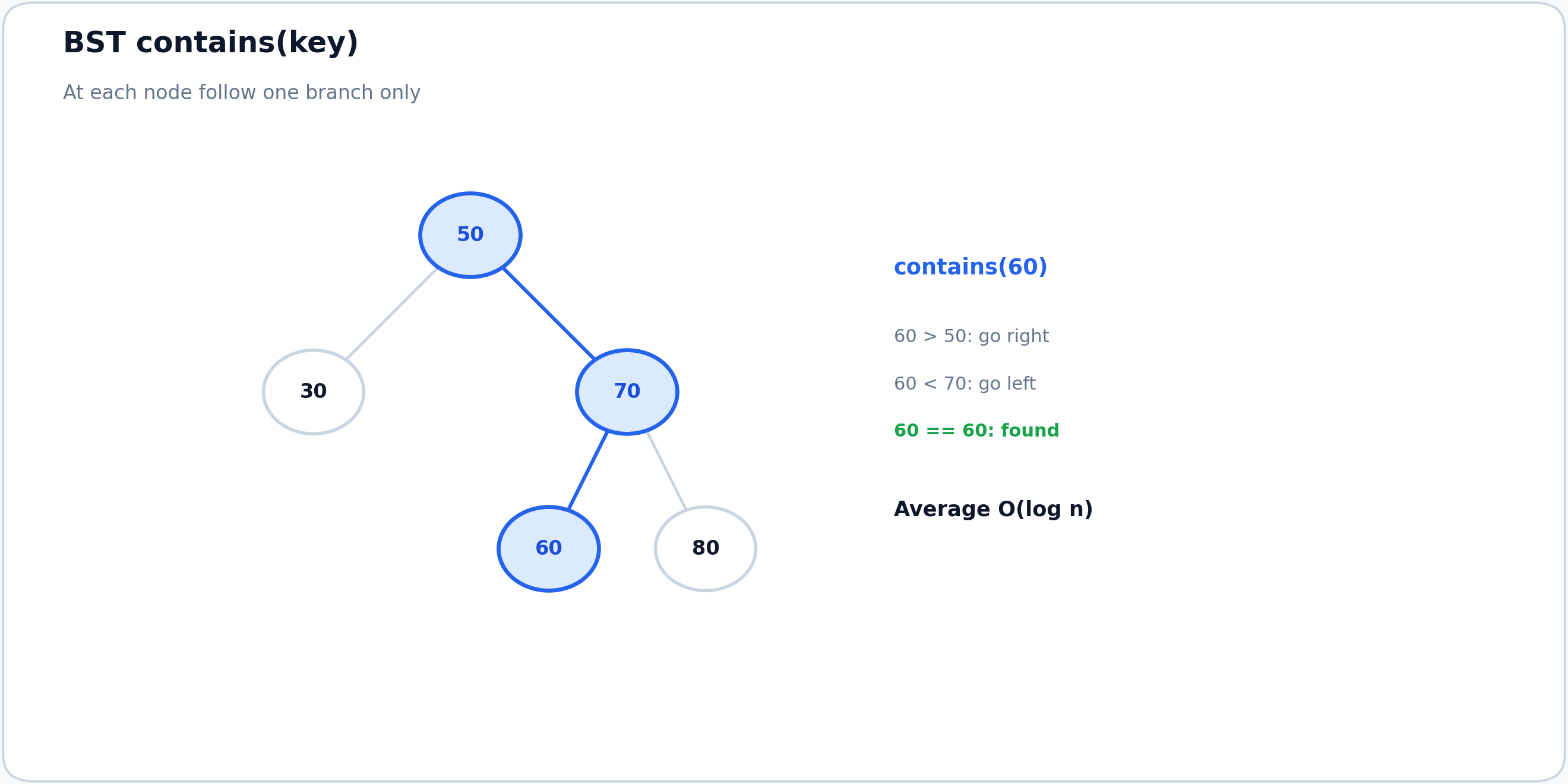
Har bir tugunda kalitni solishtirib, aniq bitta shoxni kuzatib boriladi. Aynan shu sababli muvozanatli daraxtlarda qidirish tez bo'ladi.
def contains(self, key):
    current = self.root
    while current is not None:
        if key == current.key:
            return True
        current = current.left if key < current.key else current.right
    return False
delete(key)
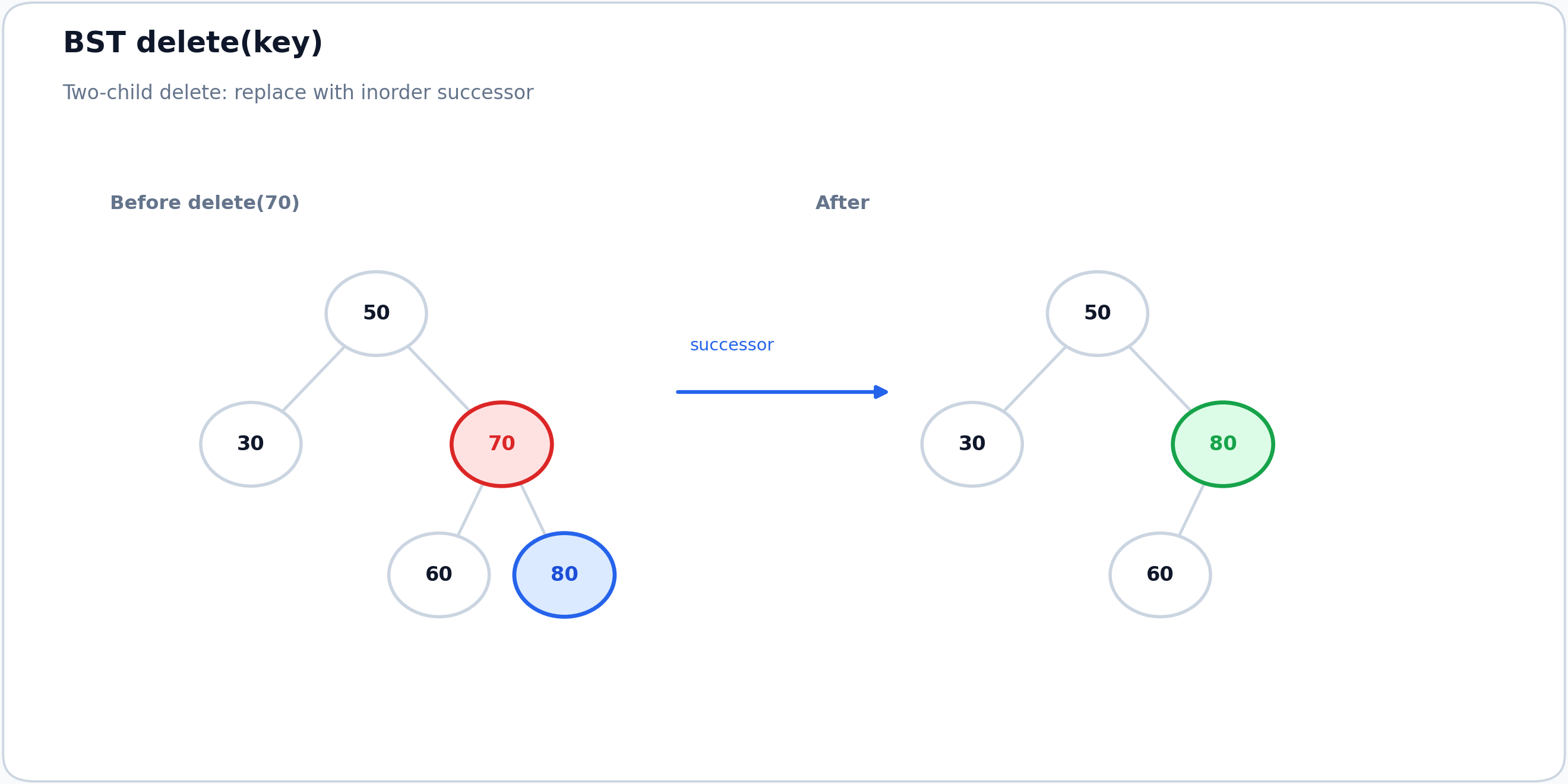
O'chirishda uchta tuzilmaviy holat bor:
- Tugunning bolasi yo'q: to'g'ridan-to'g'ri o'chiriladi.
- Tugunning bitta bolasi bor: o'sha bolani yuqoriga ko'taradi.
- Tugunning ikkita bolasi bor: uni inorder vorisi (successor) bilan almashtiradi, so'ngra vorisni o'chiradi.
def delete(self, key):
    self.root = self._delete(self.root, key)


def _delete(self, node, key):
    if node is None:
        return None

    if key < node.key:
        node.left = self._delete(node.left, key)
        return node
    if key > node.key:
        node.right = self._delete(node.right, key)
        return node

    if node.left is None:
        return node.right
    if node.right is None:
        return node.left

    successor = self._min_node(node.right)
    node.key = successor.key
    node.right = self._delete(node.right, successor.key)
    return node
inorder() aylanib chiqishi
Avval chap qism daraxt, keyin tugunning o'zi, so'ngra o'ng qism daraxt tashrif buyuriladi. BST uchun natija tartiblangan bo'ladi.
def inorder(self):
    result = []

    def visit(node):
        if node is None:
            return
        visit(node.left)
        result.append(node.key)
        visit(node.right)

    visit(self.root)
    return result
To'liq amalga oshirilishi
class BSTNode:
    def __init__(self, key, left=None, right=None):
        self.key = key
        self.left = left
        self.right = right


class BinarySearchTree:
    def __init__(self):
        self.root = None

    def insert(self, key):
        self.root = self._insert(self.root, key)

    def _insert(self, node, key):
        if node is None:
            return BSTNode(key)
        if key < node.key:
            node.left = self._insert(node.left, key)
        elif key > node.key:
            node.right = self._insert(node.right, key)
        return node

    def contains(self, key):
        current = self.root
        while current is not None:
            if key == current.key:
                return True
            current = current.left if key < current.key else current.right
        return False

    def delete(self, key):
        self.root = self._delete(self.root, key)

    def _delete(self, node, key):
        if node is None:
            return None

        if key < node.key:
            node.left = self._delete(node.left, key)
            return node
        if key > node.key:
            node.right = self._delete(node.right, key)
            return node

        if node.left is None:
            return node.right
        if node.right is None:
            return node.left

        successor = self._min_node(node.right)
        node.key = successor.key
        node.right = self._delete(node.right, successor.key)
        return node

    def _min_node(self, node):
        current = node
        while current.left is not None:
            current = current.left
        return current

    def inorder(self):
        result = []

        def visit(node):
            if node is None:
                return
            visit(node.left)
            result.append(node.key)
            visit(node.right)

        visit(self.root)
        return result
Boshqa aylanib chiqishlar
def preorder(node, out):
    if node is None:
        return
    out.append(node.key)
    preorder(node.left, out)
    preorder(node.right, out)


def postorder(node, out):
    if node is None:
        return
    postorder(node.left, out)
    postorder(node.right, out)
    out.append(node.key)
- Preorder ko'pincha serializatsiya va nusxalashda ishlatiladi.
- Postorder esa bolalar ota tugundan oldin qayta ishlanishi kerak bo'lganda ishlatiladi.
Murakkablik xulosasi
| Amal | O'rtacha | Eng yomon holat |
|---|---|---|
| Qo'shish | O(log n) |
O(n) |
| Qidirish | O(log n) |
O(n) |
| O'chirish | O(log n) |
O(n) |
| Aylanib chiqish | O(n) |
O(n) |
Eng yomon holat daraxt qiyshiq bo'lib qolganda yuzaga keladi. Muvozanatli daraxtlar (AVL, Red-Black) balandlikni log n ga yaqin saqlaydi.
Amaliy eslatmalar
- BST tartiblangan ma'lumotlar bilan ishlash amallari uchun juda yaxshi.
- Agar qo'shish tartibi deyarli tartiblangan bo'lsa, o'z-o'zini muvozanatlaydigan daraxtdan foydalaning.
- Faqat min/maks ustuvorlik amallari uchun heap soddaroq va odatda tezroq bo'ladi.
inorder()— BST qiymatlarini tartiblangan holatda eksport qilishning eng oson yo'li.
Tipik xatolar
- Takrorlanuvchi kalit siyosatini e'tiborsiz qoldirish (rad etish, sanash yoki almashtirish — aniq belgilangan bo'lishi kerak).
- Ikkita bolali o'chirish holatini unutish.
- Daraxt shaklini hisobga olmasdan
O(log n)deb taxmin qilish.