

Stack and queue are restricted-access data structures.
- Stack: LIFO (last in, first out)
- Queue: FIFO (first in, first out)
Book alignment (Chapters 8 and 9)
The Necaise sequence presents:
- queue ADT and circular-array/linked implementations
- priority queue variants (bounded and unbounded priorities)
- stack ADT and classic stack applications
Useful distinction from the book:
- queue order is arrival-based (FIFO)
- priority queue order is priority-based (ties remain FIFO)
- stack access is always from one end (LIFO)
Choosing the right Python container
- Stack: plain
listis efficient (append/popfrom end areO(1)). - Queue: prefer
collections.dequefor production queues. - Linked-list queue implementation is useful for understanding pointer mechanics.
Stack operations
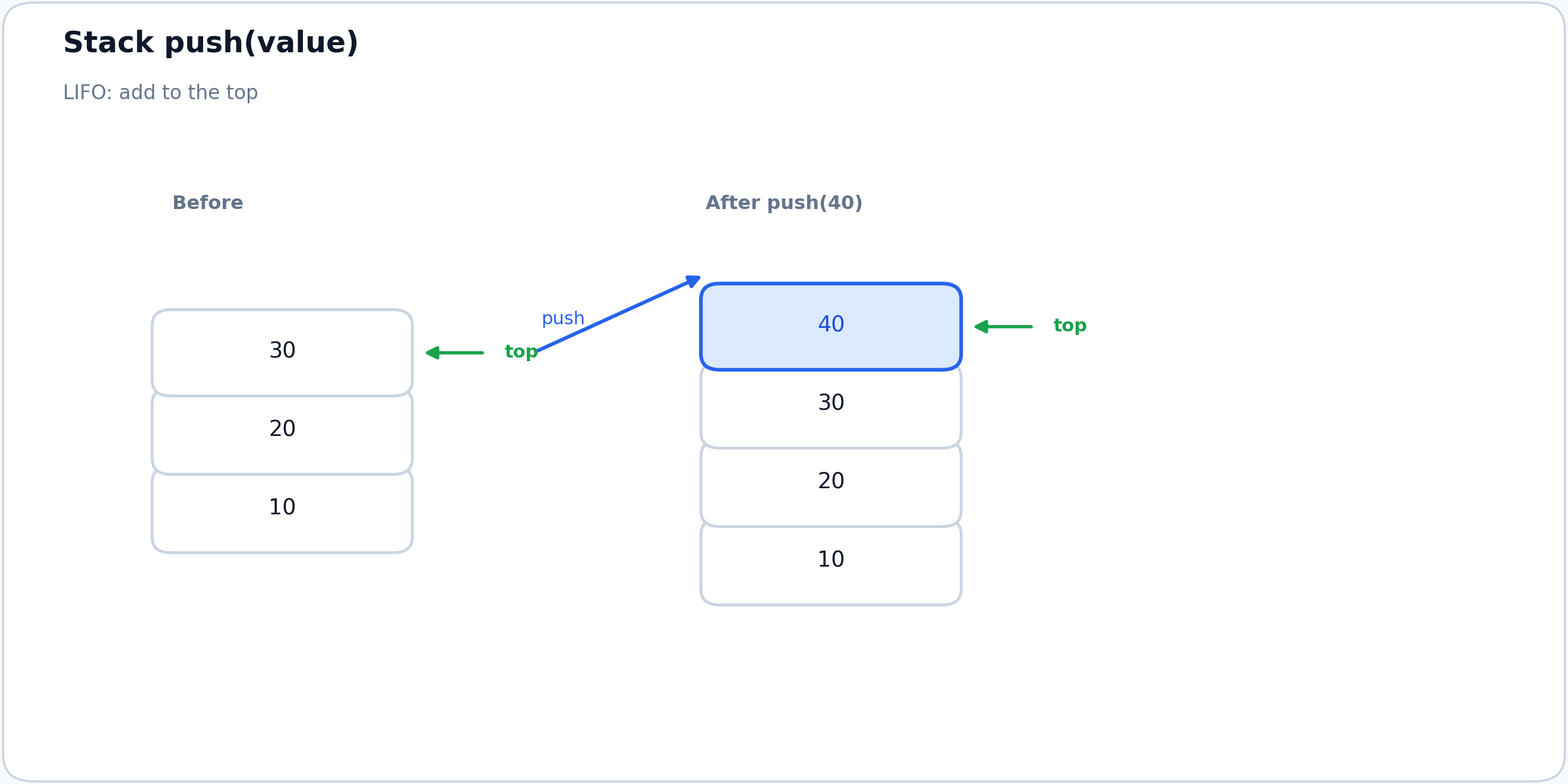
push(value)
Insert at the top. With a Python list, this is append at the end.
def push(self, value):
    self.items.append(value)
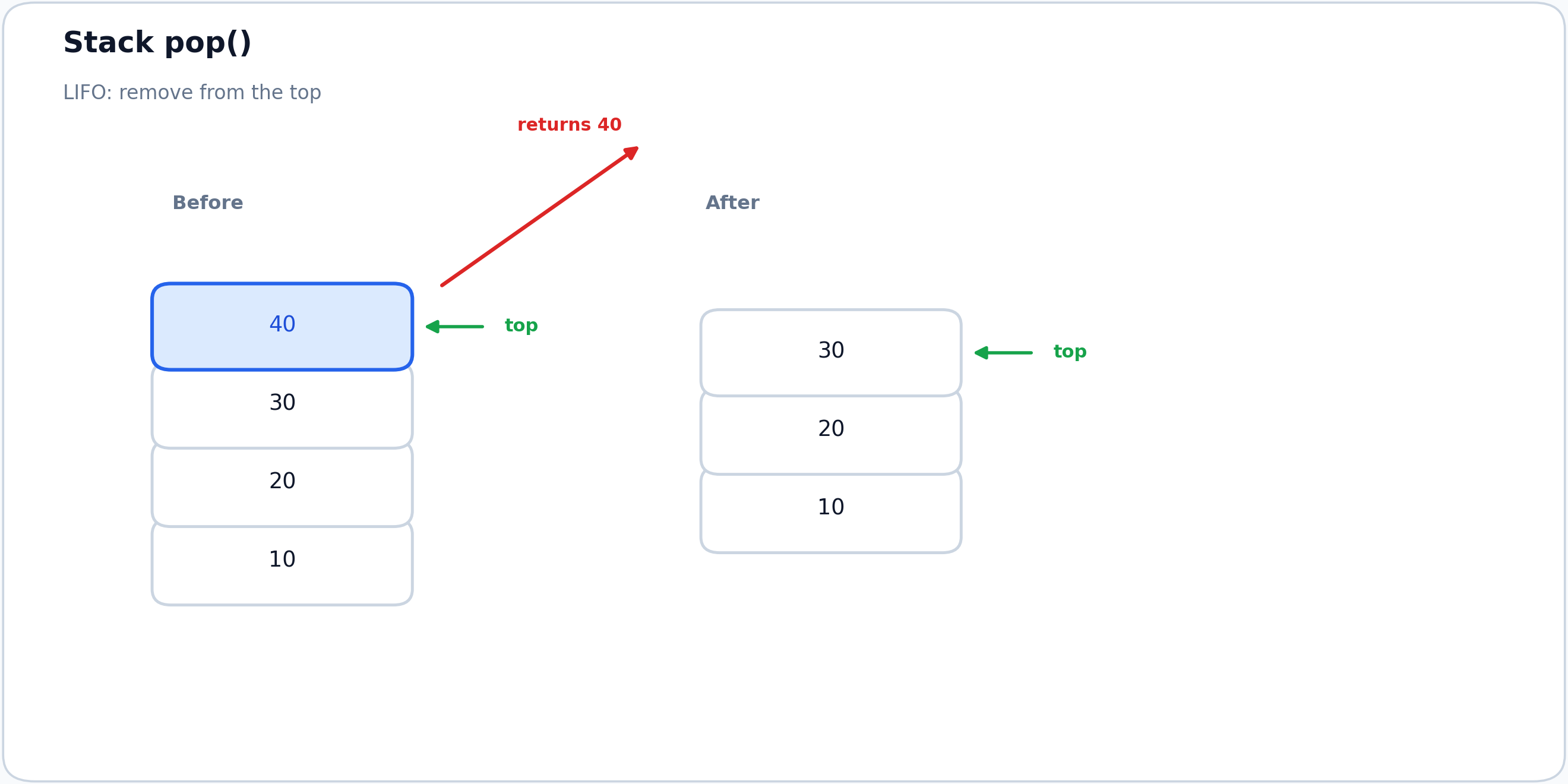
pop()
Remove and return the top element. This is the inverse of push.
def pop(self):
    if not self.items:
        raise IndexError('pop from empty stack')
    return self.items.pop()
peek()
Read the top value without removing it.
def peek(self):
    if not self.items:
        raise IndexError('peek from empty stack')
    return self.items[-1]
Queue operations
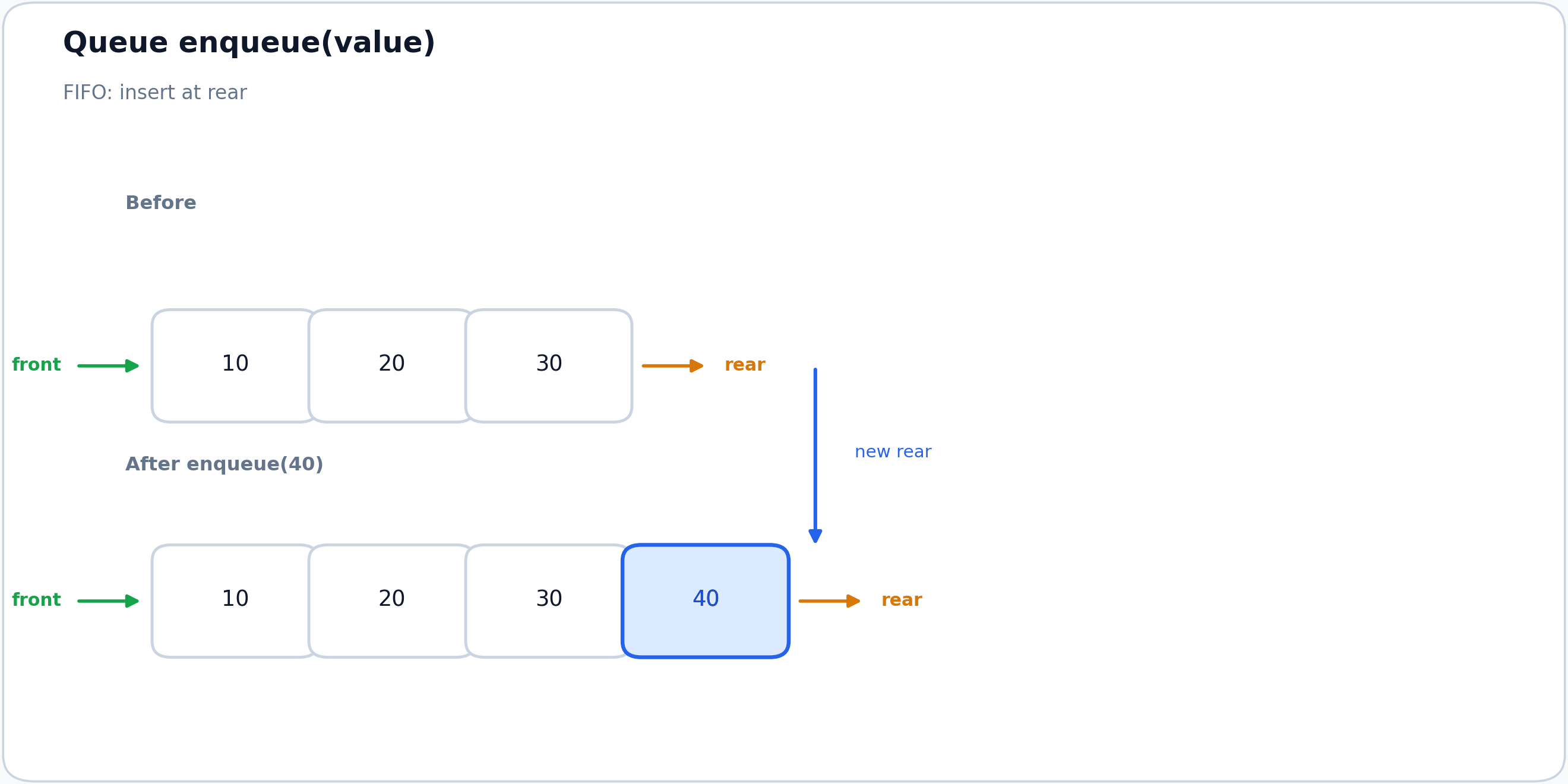
enqueue(value)
Insert at the rear. Linked-list queue keeps this in constant time.
def enqueue(self, value):
    node = Node(value)
    if self.rear is None:
        self.front = self.rear = node
    else:
        self.rear.next = node
        self.rear = node
    self.size += 1
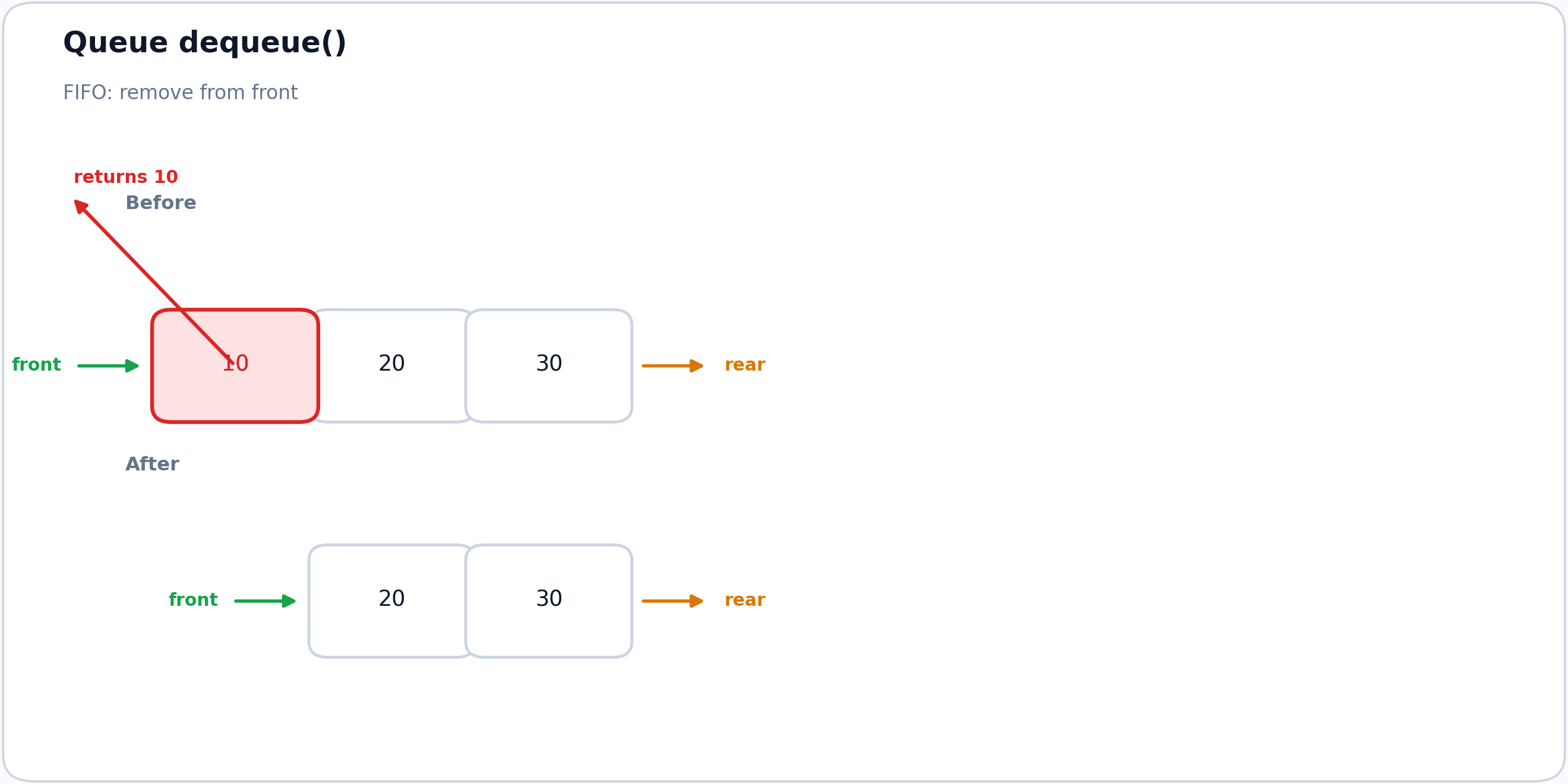
dequeue()
Remove and return from the front. If the queue becomes empty, reset both front and rear.
def dequeue(self):
    if self.front is None:
        raise IndexError('dequeue from empty queue')

    value = self.front.value
    self.front = self.front.next
    if self.front is None:
        self.rear = None
    self.size -= 1
    return value
peek()
Read the front value without removing it.
def peek(self):
    if self.front is None:
        raise IndexError('peek from empty queue')
    return self.front.value
Full implementation
class Stack:
    def __init__(self):
        self.items = []

    def push(self, value):
        self.items.append(value)

    def pop(self):
        if not self.items:
            raise IndexError('pop from empty stack')
        return self.items.pop()

    def peek(self):
        if not self.items:
            raise IndexError('peek from empty stack')
        return self.items[-1]

    def is_empty(self):
        return len(self.items) == 0


class Node:
    def __init__(self, value, next_node=None):
        self.value = value
        self.next = next_node


class Queue:
    def __init__(self):
        self.front = None
        self.rear = None
        self.size = 0

    def enqueue(self, value):
        node = Node(value)
        if self.rear is None:
            self.front = self.rear = node
        else:
            self.rear.next = node
            self.rear = node
        self.size += 1

    def dequeue(self):
        if self.front is None:
            raise IndexError('dequeue from empty queue')

        value = self.front.value
        self.front = self.front.next
        if self.front is None:
            self.rear = None
        self.size -= 1
        return value

    def peek(self):
        if self.front is None:
            raise IndexError('peek from empty queue')
        return self.front.value

    def is_empty(self):
        return self.front is None
Deque-based queue in real projects
from collections import deque

q = deque()
q.append(10)      # enqueue
q.append(20)
print(q.popleft())  # dequeue -> 10
Use deque when you need both speed and simplicity in production code.
Complexity summary
| Operation | Stack | Queue |
|---|---|---|
| Insert | O(1) push |
O(1) enqueue |
| Remove | O(1) pop |
O(1) dequeue |
| Peek | O(1) |
O(1) |
Typical uses
- Stack: expression parsing, undo/redo, depth-first traversal.
- Queue: breadth-first traversal, task scheduling, rate-limited processing.
Pattern example: valid parentheses using stack
def is_valid_parentheses(text):
    pairs = {')': '(', ']': '[', '}': '{'}
    stack = []

    for ch in text:
        if ch in pairs.values():
            stack.append(ch)
        elif ch in pairs:
            if not stack or stack.pop() != pairs[ch]:
                return False

    return len(stack) == 0
Typical mistakes
- Using
list.pop(0)for queue dequeue (this isO(n)). - Forgetting empty checks before
poporpeek. - Mixing queue/stack semantics in the same algorithm.